
For those looking for their next horse, be it for casual rides or competitive show jumping, racetracks can be an interesting place to find athletic thoroughbreds (and sometimes other breeds) with capabilities that can make them excellent performers. For a variety of reasons, ex-race horses are often available to be purchased or even rescued from the tracks or from an animal shelter for minimal cost.
In considering this, it is important to recognize that the racehorse industry has many less-than-ideal characteristics. Horses may be subject to abusive situations, including being forced to run on potentially crippling injuries, doping, and questionable or illegal training practices. While many racing trainers and jockeys are ethical and care about their horses, the possibility that a racehorse has been retired from racing due to irreparable damage (physical and/or psychological) is an important warning for anyone considering this route. However, you may find an incredible talent, or have the opportunity to save a horse’s life and create a new future for them by finding them from the tracks.
By buying or rescuing a retired racehorse, you are potentially finding a gem, or potentially giving an exhausted, wounded, or abused animal a loving home. Sadly, to this day many thoroughbreds end up being slaughtered rather than being rehomed; the vast majority of horses raised for racing do not make it at a level that sponsors find worth sustaining. Yet many racehorses take very well to other riding disciplines with the right training, patience, and (if needed) rehabilitation.
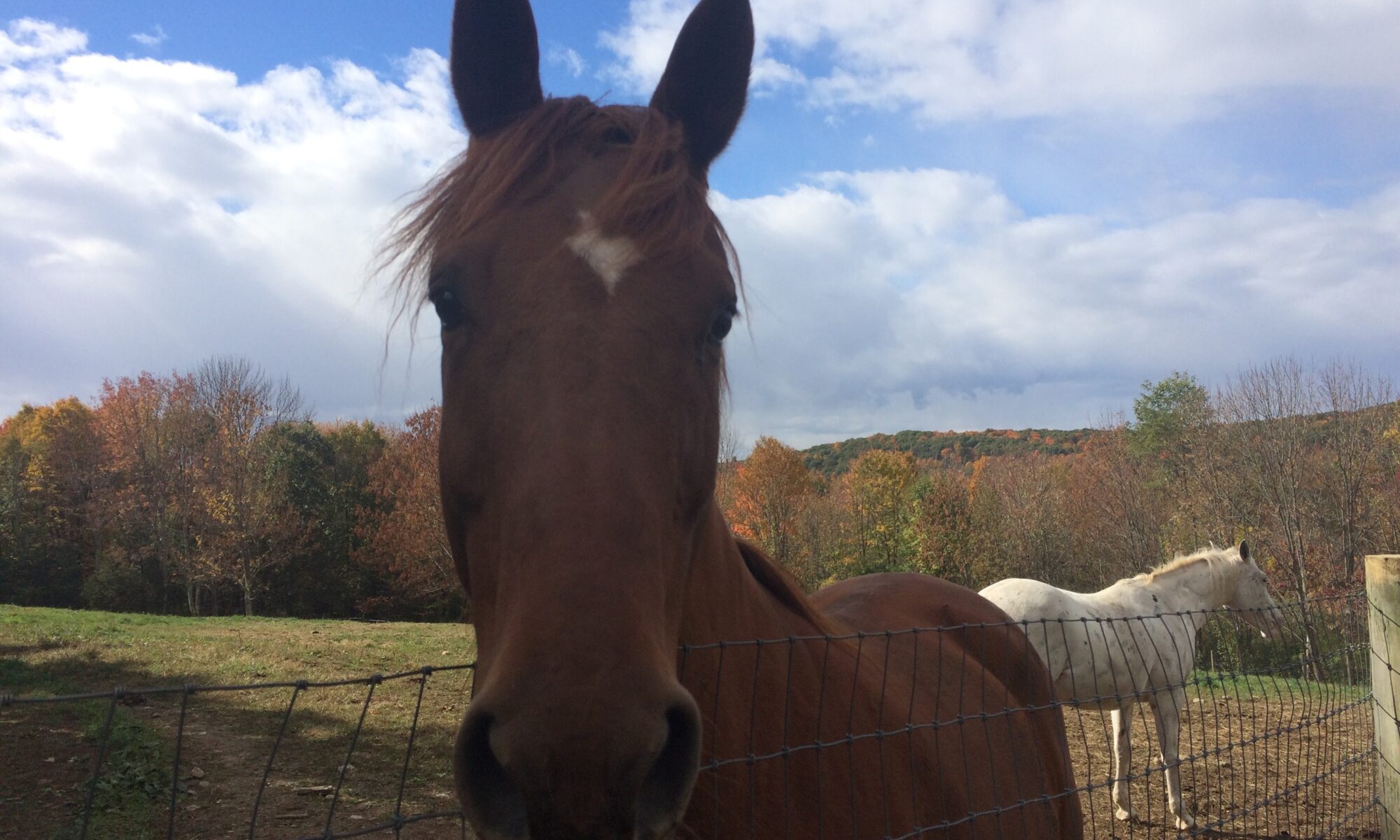
My family had the opportunity to adopt three horses that were associated with the racing industry some years ago. They were not ex-race horses themselves, but were caught up in a terrible racing-related nurse-mare scheme, the dismantling of which meant that dozens of foals and mares needed immediate care and re-homing right before the NY winter. We took in a mare and two foals, and over the next three years, worked with them to build back their trust and confidence. I’m so proud of how well they have done since. Both the mare, Alaska, and the foal, Charlemagne (Charlie), stayed with us for some time until we could train them under saddle and ultimately find them happy pleasure and cross-country riders – that’s Charlie’s nose in the picture and Alaska in the background! The little filly we took in was fortunately in better shape than the other two, and as a beautiful mover, she joined a Hunter program within a year of coming to our farm, and has since thrived.
This journey is not dissimilar to that you may expect from working with an ex-racehorse, though of course I would not pretend to draw direct parallels. It may take some time for your ex-racehorse to be ready to ride, especially if they come straight from the track. They may be too fit and run too fast for most riders, needing some time to come down from the pressure and intensity of their past work. If they were being illegally doped, they may need to literally come down, as well. Especially given the age at which many racehorses are started, you may well be best giving them a few weeks, months, or even longer to just ‘be a horse’ and enjoy turnout while you begin to gradually work with them to adjust to training for a new discipline.
When you get underway, you’ll need to remember that their training likely looks very different from non-racehorses you may have worked with in the past. Passing along below some tips to remember if you find yourself taking this route, which comes from the website Retraining of Racehorses, a resource which may be helpful for more information.
- Be realistic about your ability and experience and don’t be afraid to seek advice (they offer the RoR Helpline as just a call or email away)
- Generally a former racehorse is good to load, clip, stands for the farrier and has good stable manners.
- The horse will not be accustomed to being tied up outside his stable so is likely to fidget and become anxious.
- Racehorses are generally not accustomed to standing still when mounted because lads and lasses are generally legged up whilst the horse is walking.
- The horse is used to being ridden but not in quite the same way as a riding horse. Some of the aids are different, indeed quite the opposite, to what he is used to and you are accustomed to applying in a given situation.
- The horse may not be used to anyone riding with long stirrups although this is much less likely these days; it is more the placement of the lower leg if initially drawn too far back that a horse can react to.
- Your braking system could well be limited; and when you shorten up the reins and undoubtedly, although probably unintentionally, incline yourself forward, you are actually giving cues to go faster!
- The horse will know little about contact in terms of how we understand it for the riding horse so when you pick up the reins, the head and neck will invariably go up and out rather than low and rounded. You may also experience head tossing and snatching at the bit.
- The horse will be used to riding out in company which means that hacking out on your own you could encounter problems in relation to insecurity. Riding in company can also present its own issues as will be associated with work ie. a training gallop.